Tuesday, February 14, 2012

Native Florida Sand Pine Scrub Land

     We are so lucky to live in an absolutely amazing part of this country...South Florida.  A place where in a few hours drive you could be air-boating across the Everglades, camping in an indigenous old growth forest in Ocala, collecting seashells on our gorgeous sugar sand beaches, experiencing Walt Disney World, scuba diving in the Atlantic ocean swimming among our coral reef's, charter fishing in the Gulf of Mexico, surfing perfect waves on the Treasure Coast or tubing throughout our fresh water springs and rivers.  Gosh, I could go on and on about how fantastic Florida is.  Though a sidebar here, I truly wish Florida's elected government officials would preserve more our precious land and stop this ridiculous over development.  I am sure I'm not the only one that feels we need more parks, community gardens and protected areas of natural flora and fauna.  Ahhhh maybe one day we will but an end to the insanity....until then please get out there to show your support by enjoying the wonderful parks that we do have.

     One little gem of a park here in Pompano is called "Crystal Lake Sand Pine Scrub Natural Area".  Yes, very convoluted name though extremely simple by nature.  So many people drive right past it, never stopping to experience something new.  Consider this if you will...a lunch time break to ease your mind and walk along a meandering path of nature and fresh air.  So here are a few pictures of our sand pine scrub walkabout last evening.
Crystal Lake Sand Pine Scrub Natural Area
This sign greets you at the entrance 
Just in case if you didn't know already
This native wildflower, Puncture Weed, has a
sprawling growth pattern along the sandy ground.
The butterflies love the yellow buttercup flowers.
Puncture weed, tribulus cistoides, or Burnut
is a dainty looking plant but be careful because
like it's name it has sharp thorns on it.
The sun was setting in the west as we walked
about the nature trail.  This kind of light really
brings out all the colors in the landscape.
This picture reminds me of the old Florida
landscape painters.  When they would bring all their
materials with them and paint in the native surroundings.
When we were young, I remember my brother
& his friend ate these Abrus seeds despite being
warned numerous times they are poisonous!
They had to have their stomach's pumped since the
seed contains a deadly toxin called abrin.  One seed can
kill a human but birds seem unaffected, go figure.
Abrus or Rosary Pea, abrus precatorius, are a non-native vine that grows in Florida's woodlands. The hard seeds are bright red with a black spot as a warning...do not eat!  If you haven't seen these in the wild then you may have seen jewelry made from these. 


Gopher tortoise's love eating the fruit from
these prickly pear cactus. The fruit can
also be made into jellies & jams, delicious!
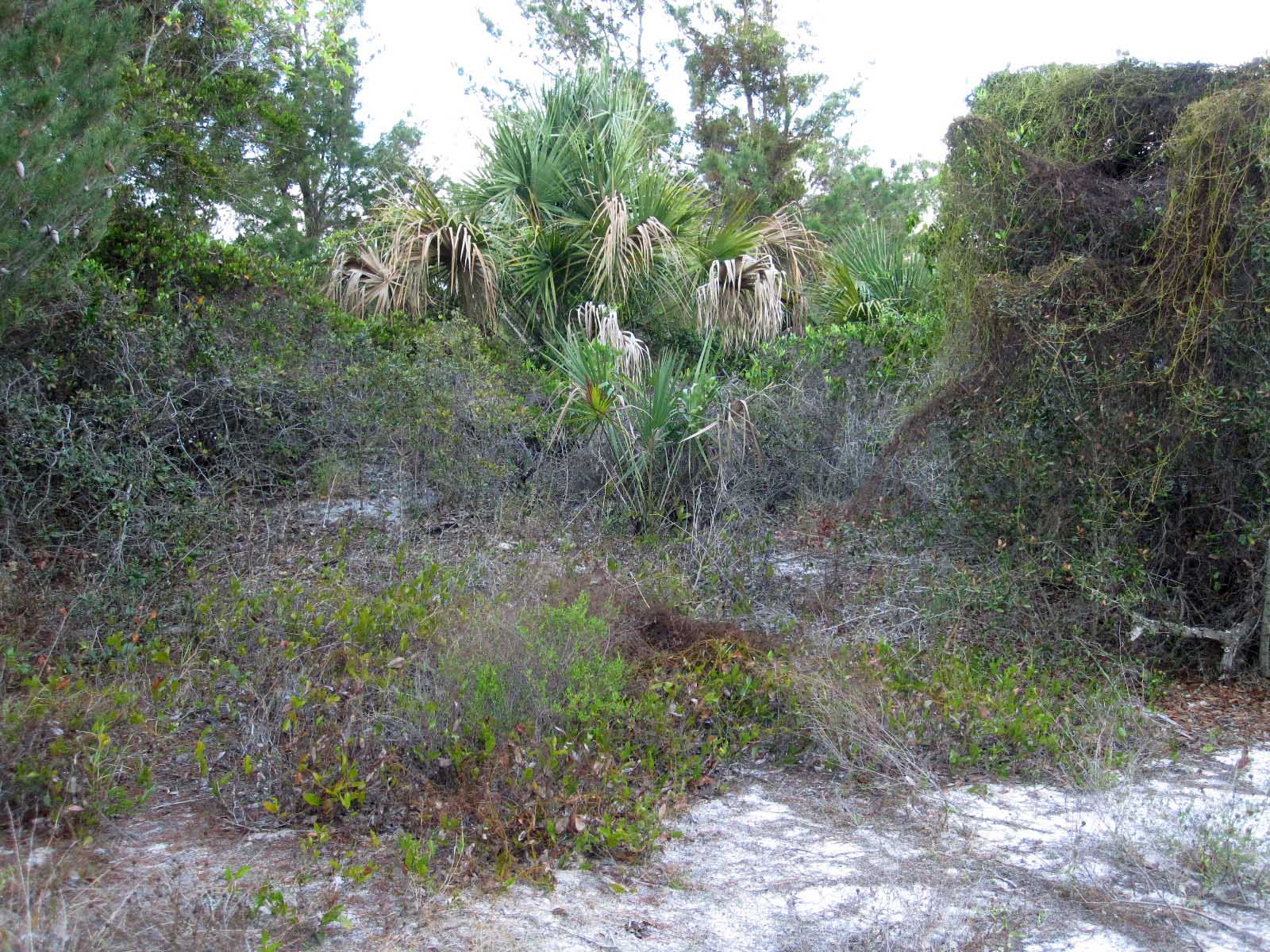
This is a nice composition of the pineland part of
a scrub area.  The pine trees are the large trees in a scrub
environment providing shade for understory shrubs.
Which way do we go???
We went this way :)
To the left of the pictures is a Sand Pine, in the
middle is a Saw Palmetto Palm, the right is a
Sand Live Oak covered in Lovevine.  The foreground
is Gopher Apple, & Wild leaf October flowers.
A close up of some of the ground plants: Wild Leaf October flowers, Gopher Apple, all covered in Lovevine, 


Sand Pine with pine cones all over
Close up of a Sand Pine tree


Florida Rosemary with a Greenbrier vine
growing over it.
I tried to get a good picture but to no avail though this is a 7-minute-itch plant or Tread-Softly, is covered in small hairs that pack a stinging punch, so don't pick the flowers here, lol
We saw & heard the Kestral, WOW!
Plus lots of butterflies
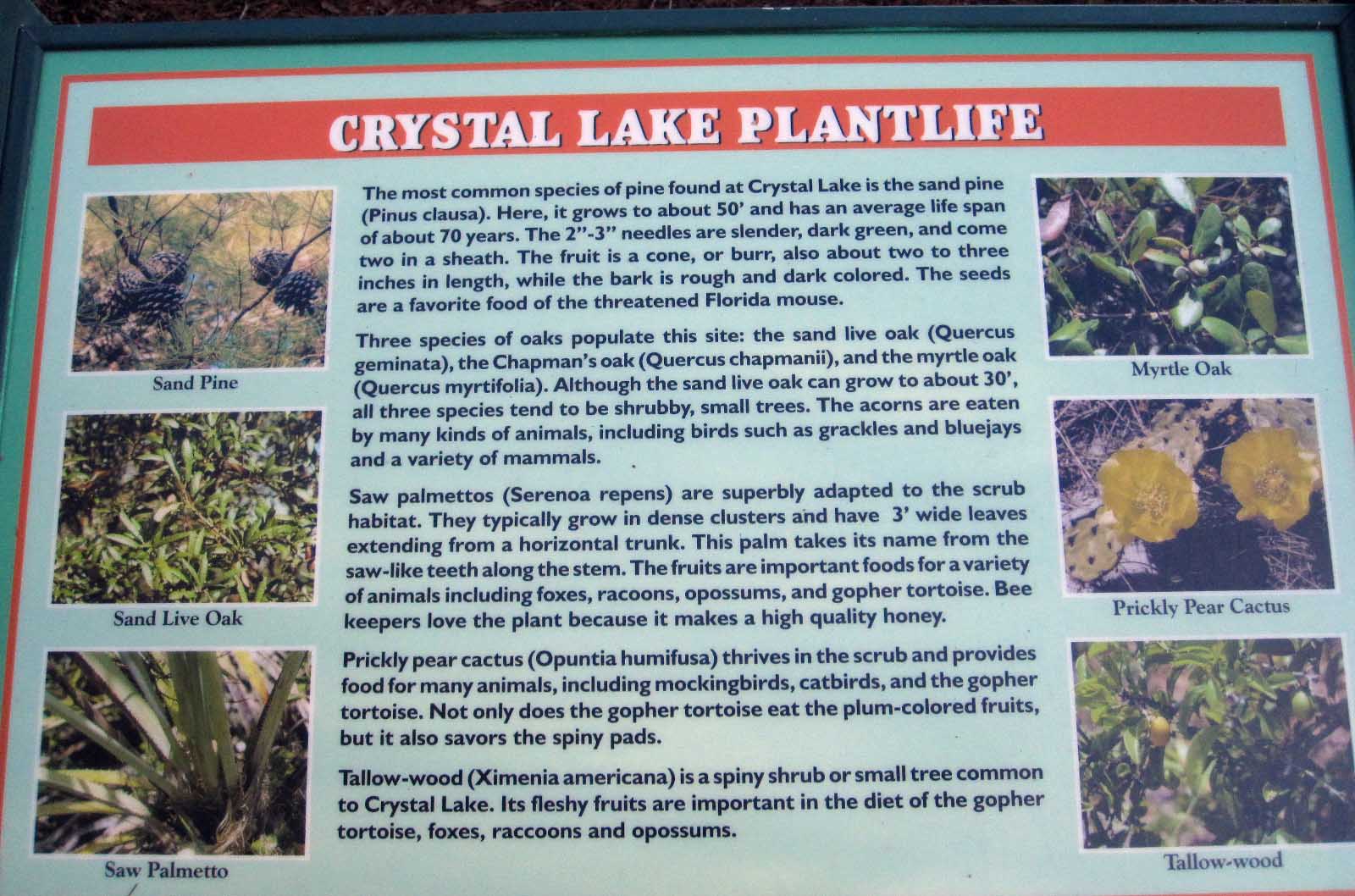
Some of the native plants I have mentioned in the previous pictures. These informative signs are throughout the path.

I have no idea what these plants are but
apparently they were in bloom & everywhere.
I just love this picture with all the different colors
textures and layers of plants.  Just wish we had a
better camera to take vividly clear pictures. :)


The only reason why I spotted this little beauty
of an airplant tucked down in an oak is because of
the bright red, orange & yellow spikey bloom.
This an oak covered in lichen & what is called ball moss, which is really a type of airplant. These plants aren't harmful to oaks but are part of it's ecosystem.
All good things must come to an end, these
trees have become termite delicacy.
Ant mounds, just how cool is that!

Love these Sand Pine trees, the way the
wind blows through the needles makes a
peaceful shwoooosh sound
What a gorgeous day to be out in
nature, exploring our counties parks
right in our own backyards.
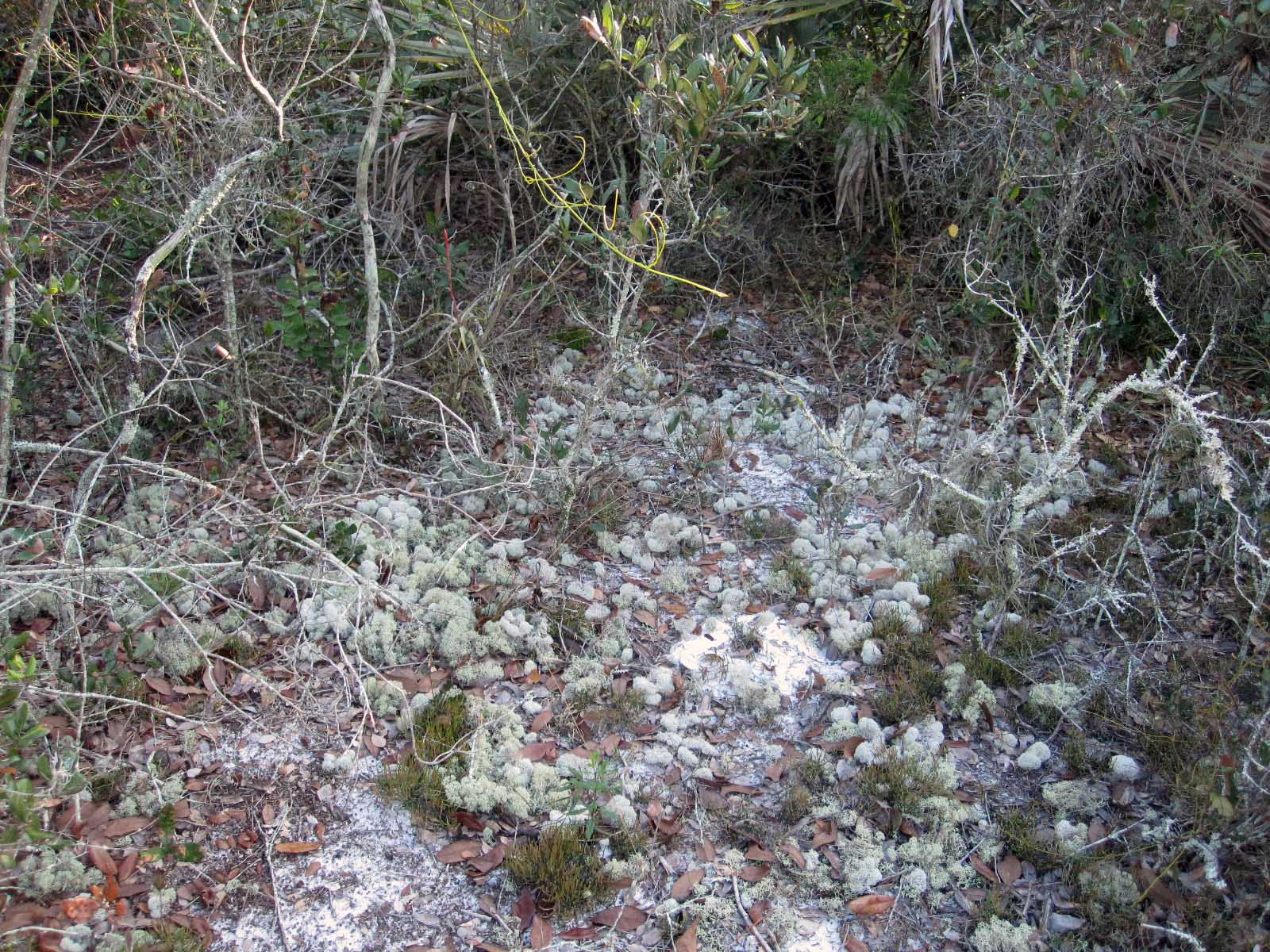
If you didn't know what these little puff
balls are you would probably never notice them.
This is deer moss which is part of the lichen family.
A closer look at deer moss, they are extremely slow
growing. A small patch like this probably took decades, so let's leave them for the deer to eat.
A beautiful little pot-bellied airplant growing
 in an oak with it's bright red bloom.
Saw Palmetto & Oak tree.
Lichen growing all over the oak.
Another captured moment in time.
Love the composition of this picture.
Moss & Lichen cover Oak tree trunks.

Looking to the sky with wonder & amazement
Up in the Myrtle Oak is a beautiful
GiantWild Pine Airplant
This picture of another giant wild pine
airplant looks like it could be in the mangroves
Absolutely stunning color orange of this fungus
growing on a dead oak branch on the forest floor.
     Well this concludes our little tour of one of Broward Counties parks, aka protected scrub land area.  This is a little peak of what some areas of Florida would look like if we never stepped foot here to develop our malls & houses. Hope you enjoyed a little bit of Florida's natural flora and fauna in the scrub land of Pompano Beach.
Now get out there, enjoy the gorgeous weather we are having & plant some native species! :)
Happy Gardening!
Sheri
xoxo

Sunday, February 5, 2012

Jaboticaba - Jah-bo-ti-caba lol

     Today I am talking a little bit about the Jaboticaba tree, myrciaria cauliflora, part of the Myrtle (Myrtaceae) family, believed to be a native from Brazil.  According to Perdue's horticultural information, the word jaboticaba is said to be derived from the indigenous Tupi people's word jabotim or turtle, giving it the meaning "like turtle fat".  This most likely refers to the context of the large berry; which has a thick outer skin with a sweet juicy meaty pulp inside.  The jaboticaba thrives in full sun & moist well drained soil but can adapt to most other soil types; except alkaline.  We live in an area by the ocean which is considered "pine scrub land" zone 10b where the ground is sandy and dry by nature.  Believe it or not, ours does very well with the slight salt in the air and sandy ground.  Though I do make sure to fertilize our yard about 3 times a year, making a huge difference in how the garden grows.  


     Jaboticaba's rarely reach heights over 20-25 feet here in the US, although in Brazil they can grow up to 35-40 feet.  It is known that established trees can survive short periods of temperatures ranging in the 20's-30's F.  Though if you spent good money on purchasing one of these amazing trees (& yes they can be as expensive as they are a rarity to find) you probably might not want to take that chance.  Since they are very slow growing trees, try planting it in a pot, that way you can bring inside if you live in a frostier environment. You will usually see them with multi-stemmed trunks rather than a single leader tree.  The older the tree is, the more twisted and intertwined the branches are which makes for a very sculptural effect.  The bark is a lot like my guava tree with multi-colors of reddish browns and the bark flakes off in small pieces as the tree grows.


     The small white furry looking flowers pop out like star bursts all over the tree's trunk & branches giving it a very unique look; almost like caterpillars.  The flowers then magically transform into the berries which are all the glory of this fascinating tree.  The berries start out green and end up a large dark deep purple black.  They can be almost 2" in diameter.  The berries are very similar to grapes though unlike grapes, you really should avoid eating the skin due to the high amount of tannin's stored in the peel; plus they are thick and leathery, not a fun chew.  The inside is where all the goodness is at, with it's juicy sweet pulp that has a grapey meloney taste to it, just be careful of biting down on the seeds inside.  The berries can be eaten right off the tree or can be used to make jams, jellies, wine, etc.  I can't figure my jaboticaba out, sometimes the berries are uber sweet and other times they are 'eh, so-so' sweet.  It must be based on soil, water and at what point you pick the berries, which should be right when they are solid in color & soft to the touch.  Jaboticaba's can have multiple fruiting's throughout the year though it's believed that they need other tree's in the area for cross pollination to occur.  Mine fruited and I highly doubt any of my neighbor's have one in their yard, but hey who knows, lol.  


     Not a whole lot of information is known about these uniquely cool trees so when I bought mine four years ago I didn't know it needed more sun than where I planted it.  I was so afraid it was going to die in the transplanting process that I procrastinated moving it for years.  So three months ago, I finally relocated it to a full sun location.  I said some prayers, wished it well and watered it everyday.  It not only survived but it has flourished with flowers all over the branches and new growth everywhere.  Note to self: never underestimate Mother Nature; I now know that Jaboticaba's are extremely hardy & resilient tree's.  Can't wait to tell everyone about how the berries taste!
New leaf growth on our newly transplanted
jaboticaba; starts out reddish green & turns
into a deep green.
Fuzzy looking jaboticaba flowers budding
directly from the new & old growth of the tree.
These will turn into the berries.
The new location of our jaboticaba, just
don't look at the weeds.  I haven't gotten
that far in my front yard makeover, lol!
You can see the unique bark and how sculptural
the tree can become.  Jaboticaba's really don't need
any pruning.  Our's is about 4'6"high right now.
     Well that's a handful of info about the very cool and unique specimen tree called the jaboticaba.  A definite must have in every garden.  Call your local plant nurseries in your area to check their stock.  If you live in the Pompano Beach/Deerfield Beach/Fort Lauderdale area then Donna at The Garden Gate in the Pompano Citi Centre has one waiting just for you!
HAPPY GARDENING!
Best Wishes,
Sheri

Thursday, February 2, 2012

Vegetable garden

     Hello Everyone!  This morning's blog is on our little vegetable garden, well it was a vegetable garden now turned tomato garden.  It seems the tomato plants have completely taken over, lol!  We have a few odds and ends in there, like celery, Detroit red beets, Parisian carrots, a head of kale, purple hot peppers, Thai Thai hot peppers and the grey's sugar snap peas and long red florence onions are just starting to sprout.  The tomato plants are doing fantastic since I have been diligent in spraying them this year, alternating with copper fungicide and neem oil.  Same spray for the Nam Doc Mai mango, which is loaded with new flower sprays coming out; yippee!  All of the tomato plants are heirlooms and I think so far we have Hillbilly Potato Leaf, Black From Tula, Isis Candy cherry's and Cherokee Purple.  Here are a few snapshots I took this morning.  I definitely have to get a better camera!
Our little vegetable garden now dubbed
heirloom tomato garden, lol
Our heirloom tomato's growing like crazy!
I am super excited to try some of these tasty treats!
Not sure which one this is. It was from the
group of seeds that didn't sprout, so I threw the
cups of dirt into the garden and yup they sprouted!
So I don't know which one is which, total surprise!
Another surprise tomato variety.

Thai Thai hot pepper in top of picture &
round purple hot peppers in bottom of picture.
The Grey's Sugar Snap Pea shoots, YUM-O!
You can eat these right off the vine :)
We transplanted our Nam Doc Mai mango
from it's large pot to the ground & it has
completely taken off! Soooo many blooms! :)
It's hard to see all of the new spikes of flowers
& new shoots popping out of those.  I am so
impressed with how many for such a small tree!
We have had such an unusually warm winter
that all the plants think it's Spring.  Even our
Meyer lemon is in full bloom.
After we planted our Meyer lemon in the ground, it
went through a bit of shock but now this little tree is completely filled with flowers soon to be lemons :)
Well this is just a little bit of what's blooming, budding and bursting in our yard.  What's growing in your neck of the woods right now, we would love to know!
Happy Gardening!
Best wishes,
Sheri